
01 / UHMWPE
Soft Armor UD Fabric
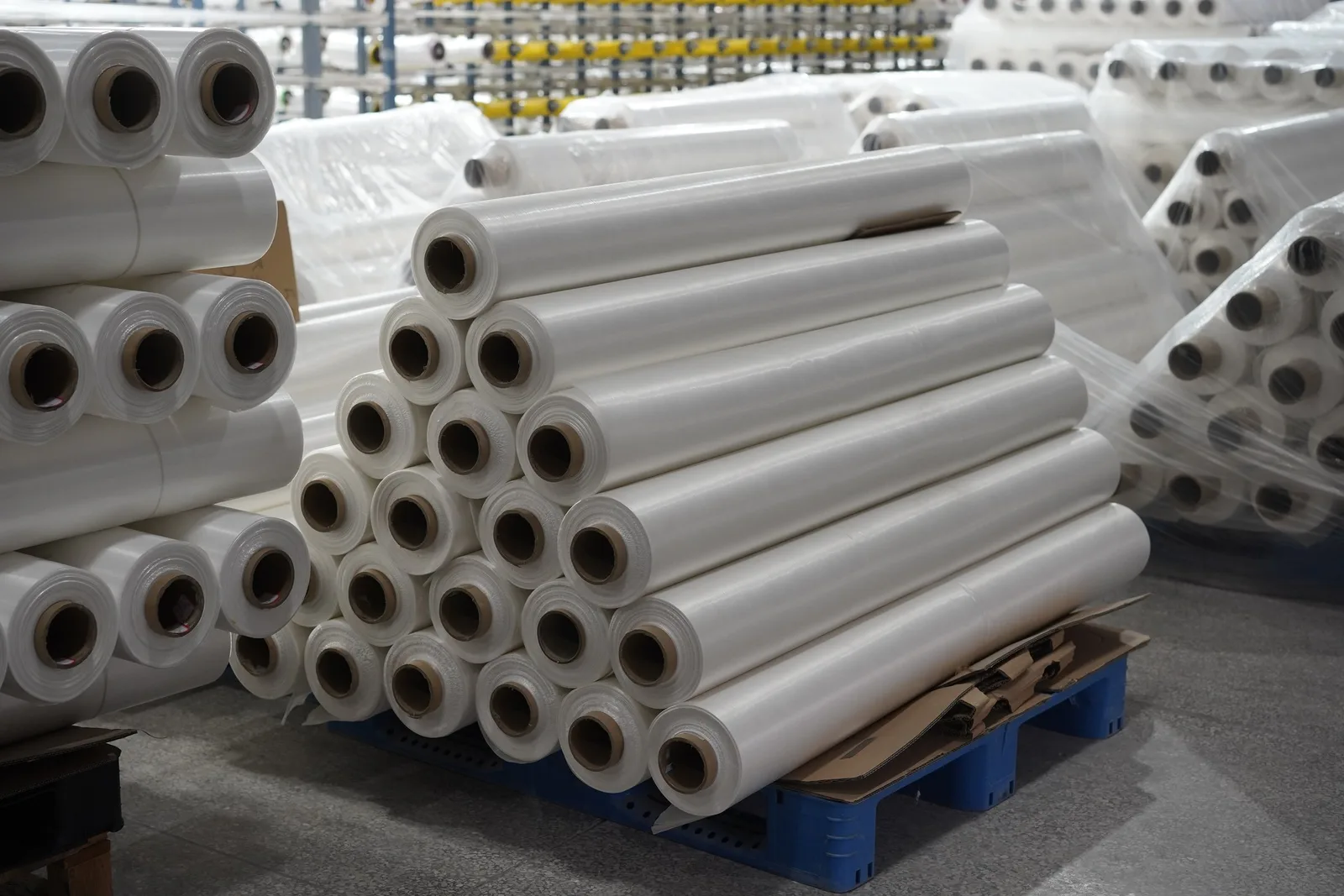
Unidirectional UHMWPE laid at 0 and 90 degrees and resin bonded. Supplied as continuous rolls for vest panel pressing. Models SB130, SB160 and SB166-225.
Scroll the table sideways to see all columns.
Scroll the table sideways to see all columns.
- • These figures describe fabric tested to the standards shown. NIJ certification applies to finished torso-worn body armor, not to fabric, so we never describe our fabric as NIJ certified.
- • V50 approximately 580 m/s for SB160 and approximately 600 m/s for SB130, both with a 17-grain (1.1 g) fragment simulating projectile at 5.3 kg/m2, tested to GJB4300A-2012 or STANAG 2920.
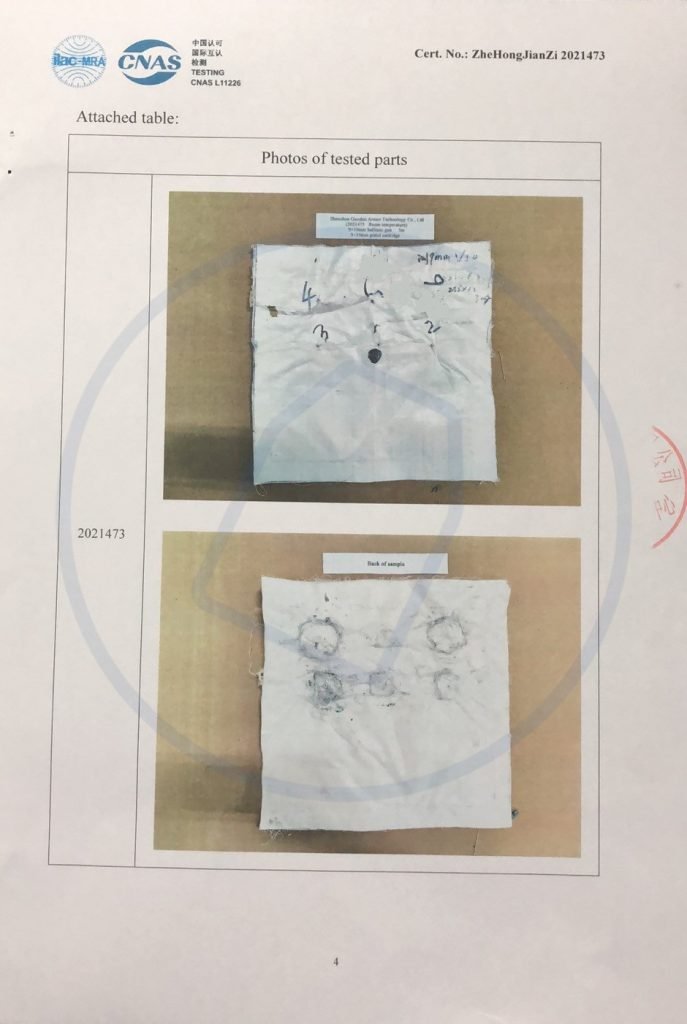
- • Measured by the China Ordnance Equipment Test Center in October 2021 against 9mm FMJ 124 grain. V50 is the velocity at which half the shots are stopped. It is a comparison figure for fabric, not a protection level, so we do not present this configuration as meeting an NIJ level.
Scroll the table sideways to see all columns.
- * The SB130 figure of 37 layers in 2019 was tested against 7.62x25mm TT, not against .44 Magnum like the earlier years in that row. It is not directly comparable with the four figures to its left.
Panel construction
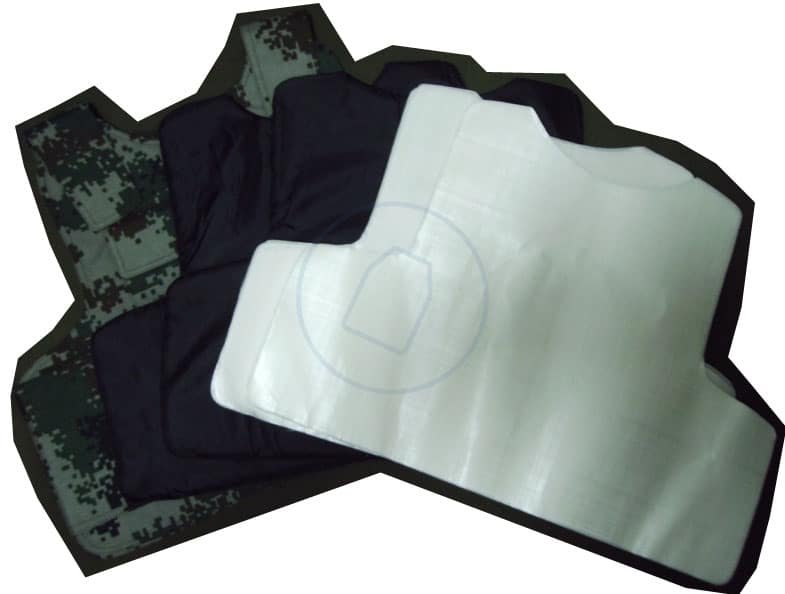
What a pressed panel looks like
This shows the layers a soft armor panel is built from: the UD insert on top, the carrier fabric, and the outer cover. The fabric we supply is the white UD insert. What goes around it is your product.
How it is made
From yarn to a cross-plied UD sheet
UHMWPE yarn is loaded onto a creel, drawn into a flat parallel sheet on the warping line, then coated with resin and laid down in alternating 0 and 90 degree layers on the UD forming line. The cross-plied sheet is dried, wound into rolls, and inspected for width, areal density and surface defects before packing.
Why cross-plying matters
How a UD layer spreads impact energy
Each UD layer is fiber running in one direction, so a single layer alone is strong along that axis but weak across it. Laying layers at 0 and 90 degrees means every direction is reinforced, and it lets the fabric spread an impact’s energy across many fibers instead of concentrating it on one point. Stacking enough cross-plied layers is what gets a panel to the tested protection levels shown above — more layers and higher areal density raise the level, which is why our own layer counts have dropped over time as fiber and weave quality improved.
FAQ
Common questions on Soft Armor UD Fabric
Is a test report available for SB130, SB160 and SB166-225?
Yes. Reports for the configurations shown on this page are available on request, including the H.P. White Laboratory and China Ordnance Equipment Test Center reports linked above.
Can roll width or areal density be changed from the standard?
Roll width is 1.6 m as standard, with custom widths available on request. SB130 and SB160 are each offered at two areal densities, shown in the roll specification table.
Can I visit the plant before ordering?
Yes. We are one hour by road from both Shanghai and Hangzhou. Tell Ida when you land and we will arrange the visit around your flights.
Used in
What this cloth is pressed into
Next step
Ask for the specification sheet or a test report
Tell us the protection level, the threat and the panel areal density you are pressing to. We will send the matching layer configuration and the report that was shot in it.