
Application 02 / Pressed shells
Fabric for helmet shells
A helmet shell is a double-curved object pressed in a heated mould. The cloth has to drape into that curve without bridging or wrinkling, take the resin your process uses, and come out of the press as one consolidated shell. Those are weaving and handling questions before they are ballistic ones, which is why this application runs on woven fabric.
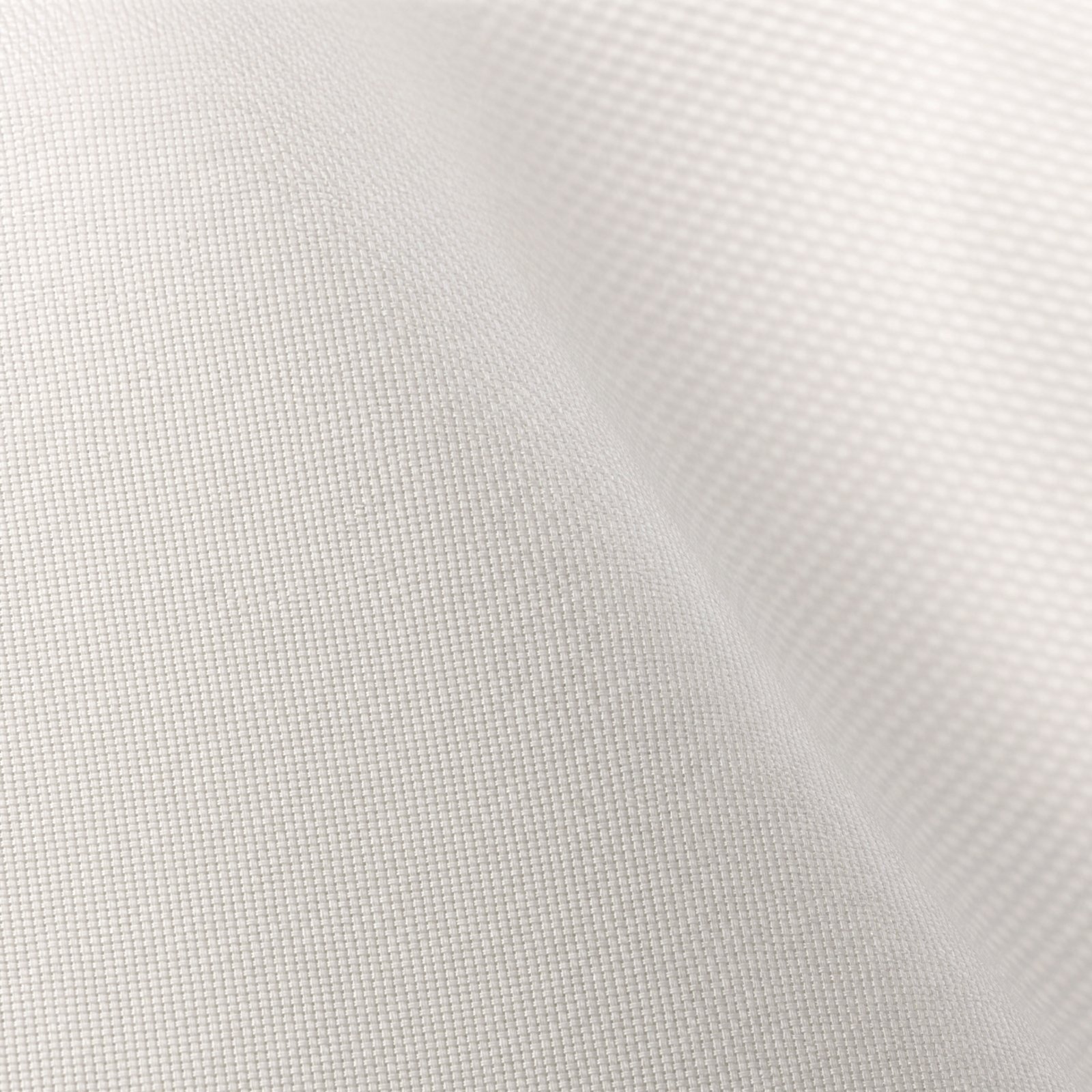
The fabric drapes rather than sitting stiff, which is what a curved mould needs.
What this application asks of the fabric
- • Drape over compound curvature. A shell mould curves in two directions at once, and cloth that will not settle into it leaves bridged areas and thin spots in the finished shell.
- • A stable weave. Threads that slide apart under press pressure move the fiber away from where the design put it.
- • A predictable resin relationship. Both woven lines run uncoated as standard so your own resin system defines the bond; single-side coating is available if your process needs it.
- • A weight range to build a lay-up from. Shell schedules usually mix weights rather than repeating one cloth, so the useful thing is a ladder of models across a wide gram range.
Line 03 / 100 percent UHMWPE
Woven UHMWPE across seven weights
Plain weave throughout, from a 200D PE100 at 0.21 mm to a 3000D PE410 at 0.88 mm. Uncoated as standard, single-side coating on request. Rolls are made to order between 1 and 3 m wide, 50 m and up.
Scroll the table sideways to see all columns.
Line 04 / 100 percent para-aramid
Woven aramid where the press runs hot
Para-aramid combines tensile strength with heat resistance that UHMWPE does not have, and the line covers eleven weights from a light PA50 at 50 g/m2 and 0.08 mm through to PA450 at 450 g/m2 and 0.7 mm. Models below PA140 are plain weave only; from PA140 upward you can specify plain or twill. Light PA50 is commonly used for helmet linings. Rolls are made to order between 1 and 3 m wide, 50 m and up.
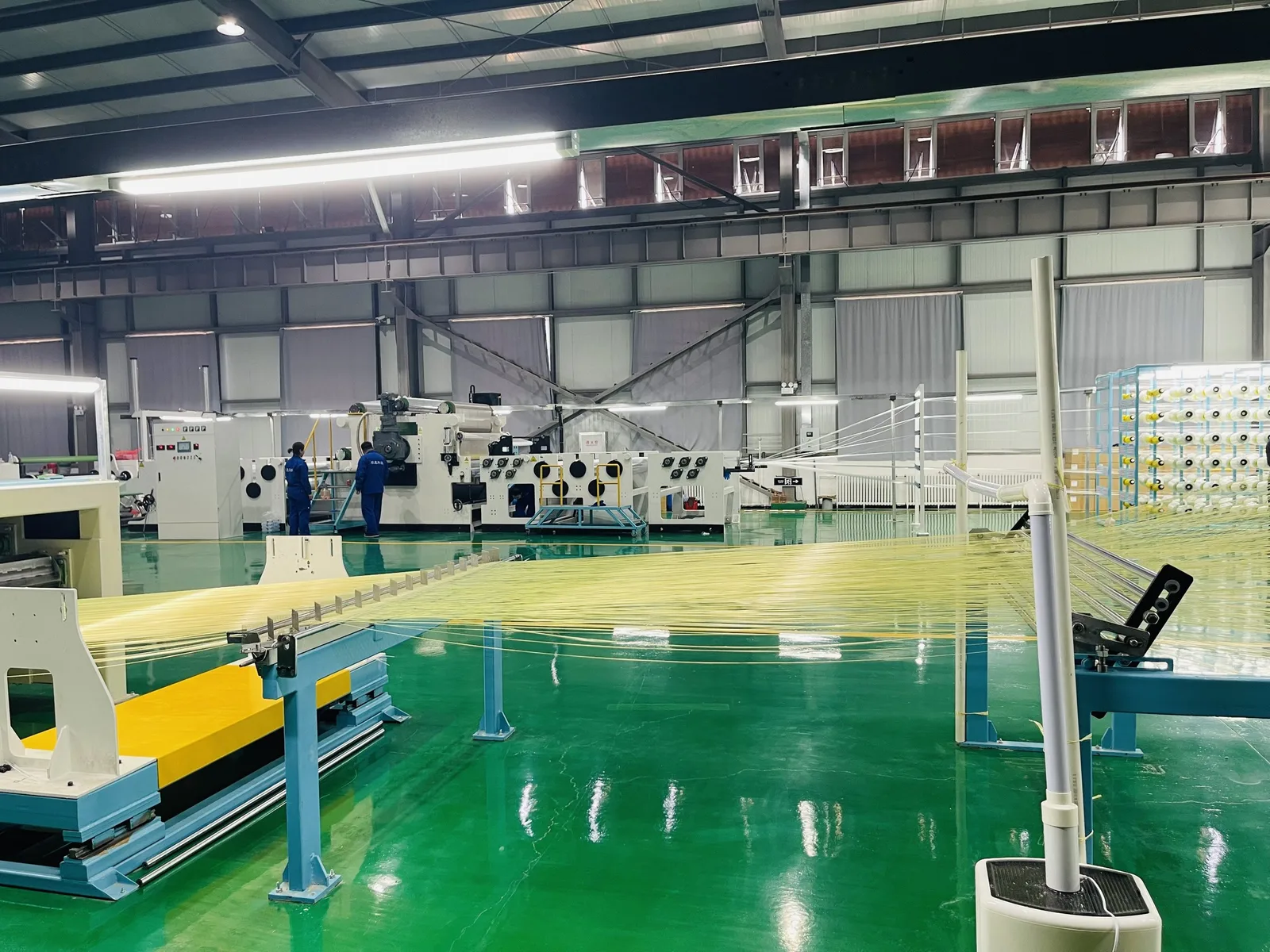
Warping. Tension here decides how evenly the yarn sits in the finished cloth.
Why there is no protection level on this page
We publish no layer count and no protection level for either woven line. How a pressed shell performs depends on the number of layers, the resin, the mould and the press cycle at your plant, not on the cloth alone. Two factories pressing the same PE240 to the same layer count can produce shells that test differently. We give you the fabric specification, send samples for your own trials, and leave the shell testing to your build. If you need a fabric that already carries published protection figures, that is the UD side of the catalogue and it lives on the soft armor panel page.
Next step
Tell us the panel, not just the fabric
Send the shell standard you are working to, your press cycle, and the weights you are already running. We will send the specification sheets for the models that fit your lay-up and tell you what samples we can supply.