
Application 03 / Rigid panels
Fabric for hard armor plates
A hard plate is a rigid consolidated panel, often built behind a strike face and often specified against rifle threats. The fabric is one input into a pressing process that also involves resin chemistry, pressure, temperature and cure time. That is why this page gives you cloth specifications and stops there.
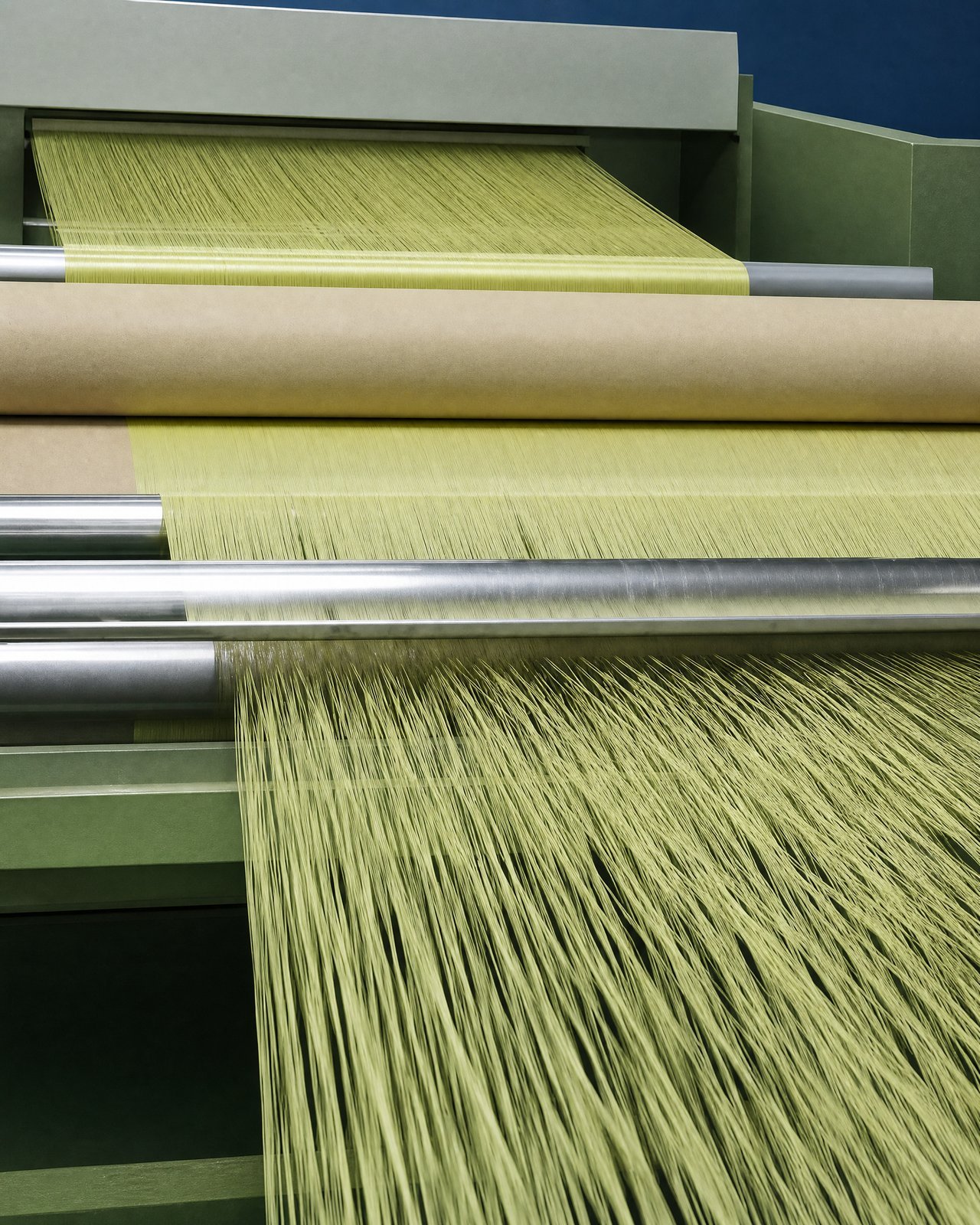
Heavier para-aramid weights are woven on the same line as the light ones.
What this application asks of the fabric
- • Heavy cloth that still consolidates. Plate schedules use far fewer, far heavier layers than a soft panel, so each layer has to wet out and bond properly under press.
- • Heat tolerance through the cure. Plate pressing runs hotter and longer than a soft panel press, which is where para-aramid earns its place.
- • Consistent areal density roll to roll. A plate is specified to a finished weight, and drift in the cloth shows up directly in that number.
- • Width to suit the plate blank. Woven rolls are made to order between 1 and 3 m, so the cloth can be matched to your cutting layout instead of the other way round.
Line 04 / 100 percent para-aramid
The heavier end of the woven aramid range
The full line runs eleven models from PA50 to PA450. The weights below are the ones that come up in plate and vehicle panel work. Plain or twill weave is available from PA140 upward, so every model in this table can be supplied either way. Rolls are made to order between 1 and 3 m wide, 50 m and up.
Scroll the table sideways to see all columns.
- • Woven UHMWPE is also used in plate work, with PE345 and PE410 at the heavy end of that line. Both woven lines run uncoated as standard.
What we will not tell you about a plate
We do not publish a protection level for the woven lines, and we will not estimate one for your plate build. A plate that meets a rifle threat does so because of a specific stack, a specific resin and a specific press, usually behind a specific strike face, and none of that is ours to certify. Any supplier who quotes you a rifle level from a cloth specification alone is telling you something the cloth cannot support. What we can do is supply consistent fabric to a published specification, send samples for your own press trials, and be straight about where our data stops.
Where we do hold reports
Our published ballistic test reports all cover soft armor UD fabric: SB160 tested to GA141-2010 level 2 at the China Ordnance Equipment Test Center in November 2022, and SB130 tested to NIJ 0101.06 Level IIIA at H.P. White Laboratory in the United States in 2010. If your enquiry needs paperwork rather than cloth specifications, those are the reports we can send, and the soft armor page is the one to read.
Next step
Tell us the panel, not just the fabric
Tell us the plate size, the finished areal density you are aiming at and the weights you already press. We will send specification sheets and tell you what samples we can supply, so your own trials can settle the rest.